
Jim Parkman Law

Federal Fraud

Alabama Federal Fraud Lawyer

Federal fraud prosecutions are built backwards from most crimes. There is no arrest at the scene, no single bad night. Instead, agents and forensic accountants spend months or years assembling emails, wire records, and bank statements into a story, and by the time you learn the story exists, the government has usually already decided you are the villain in it. The question that determines the rest of your life is whether that story survives contact with a real defense.
In 2005, federal prosecutors in Birmingham told a jury that HealthSouth CEO Richard Scrushy sat atop a $2.7 billion fraud. The indictment ran 36 counts, spanning conspiracy, mail and wire fraud, securities fraud, and money laundering, and fifteen former executives had already pleaded guilty and lined up to testify for the government. Jim Parkman led the defense, took every cooperating witness apart on cross examination, and the jury acquitted on every single count. Two decades later, it remains the benchmark federal fraud defense verdict in Alabama, and it was won in the same Hugo L. Black federal courthouse where Northern District fraud cases are tried today.
Target letter, grand jury subpoena, or agents at your door? Say nothing and call Jim Parkman Law at (205) 573-6001. Free, confidential, 24/7.

What This Page Covers

The Federal Fraud Statutes and What They Carry

Most federal fraud indictments in Alabama are assembled from a familiar set of statutes, and understanding how they stack explains why the sentencing exposure on paper looks so frightening.
Wire fraud, 18 U.S.C. Section 1343, is the government’s workhorse. Any scheme to defraud that touches an email, a text, a phone call, or an electronic funds transfer can be charged as wire fraud, and every individual transmission can be a separate count carrying up to 20 years, or 30 when a financial institution is affected. Mail fraud, Section 1341, works identically for anything that moved through the mail or a private carrier. This is how a single business dispute becomes a 15-count indictment: each invoice, each wire, each envelope gets its own count.
Bank fraud, Section 1344, covers schemes to defraud federally insured institutions and carries up to 30 years per count. Money laundering, Sections 1956 and 1957, gets layered on whenever alleged proceeds moved anywhere, adding up to 20 more years per count. Conspiracy, Section 1349, carries the same penalty as the underlying fraud and lets prosecutors sweep in people whose main involvement was proximity to the person the government actually wanted. And aggravated identity theft, Section 1028A, is the quiet weapon in modern indictments: it carries a mandatory two years that must run consecutively to everything else, which makes it a favorite piece of plea leverage.
The same toolkit powers the fraud theories making up today’s Northern District docket: pandemic-era PPP and EIDL loan fraud cases still working through the system, investment and securities fraud, mortgage and real estate schemes, government contract fraud, and tax fraud charges brought alongside IRS Criminal Investigation. The label changes. The statutes, and the defenses, mostly do not. Two neighboring situations get their own treatment on this site: the broader federal process, from indictment through sentencing, is covered on our federal criminal defense page, and physicians and healthcare businesses facing billing-based allegations should start with our Alabama healthcare fraud defense page.

The Number That Actually Decides Federal Fraud Sentences

Here is what none of the firms competing for these cases bother to explain, and it is the single most important mechanic in a federal fraud case. Your sentence is not really driven by the statutory maximums. It is driven by the federal sentencing guidelines, and in fraud cases the guidelines are driven overwhelmingly by one number: the loss amount. The guidelines assign offense levels off a loss table, so the difference between a $200,000 loss figure and a $3 million loss figure can be the difference between probation territory and years in federal prison, for identical conduct.
Prosecutors know this, which is why the government’s loss calculations run high. Intended loss gets argued instead of actual loss. Legitimate business activity gets swept into the scheme total. Repayments and offsets get ignored. Fighting the loss number, transaction by transaction, with forensic accounting of our own, is not a technicality. It is frequently the whole ballgame, and it is contested at every stage from indictment through the sentencing hearing. The guidelines have been advisory since 2005, which means a judge can be persuaded to vary from them, but only by a defense that shows up with the analysis to justify it.

Before the Indictment Is Where Cases Are Actually Won

Federal fraud cases have a long quiet phase, and that phase is the defense’s best terrain. If you have received a target letter, a grand jury subpoena, or a visit from FBI or IRS agents, the government is showing you a sliver of an investigation that is further along than you think. What you do next matters enormously.
Talking to agents without counsel is how defensible cases become convictions. A false statement to a federal agent is its own felony under Section 1001, and even accurate, innocent answers lock you into a narrative before you have seen a single document the government holds. Deleting emails or cleaning up files is worse, converting a fraud investigation into an obstruction prosecution. The correct move is silence, preservation, and counsel, in that order and on the same day.
From there, an experienced federal defense lawyer can often work in the space most defendants never know exists. Prosecutors decide what to charge and against whom, and those decisions can be influenced. Presenting exculpatory analysis before indictment, challenging the loss theory early, negotiating a client’s status from target down to witness, or steering a criminal referral toward a civil resolution have all ended cases quietly that would have made headlines otherwise. That work requires a lawyer the government takes seriously, and reputations are earned in trial. The Northern District’s prosecutors do not need to be told what happened the last time they took a marquee fraud case to a jury against Jim Parkman.

Defending the Case the Government Thought Was Finished

When charges do come, fraud cases turn on intent. The government must prove you acted with the specific intent to defraud, not that a business failed, that investors lost money, or that paperwork was sloppy. That is the seam the defense works. Reliance on accountants, attorneys, and compliance advice cuts against criminal intent. So does transparency, disclosure, and the absence of personal enrichment. Cooperating witnesses, the spine of nearly every federal fraud prosecution, arrive in court carrying plea agreements that pay them in reduced sentences for useful testimony, and a jury that understands the price of that testimony hears it differently. Dismantling cooperators is a craft, and it is the specific craft the Scrushy defense is remembered for.
The paper side of the case gets the same treatment. Forensic accountants test the government’s flow-of-funds story. Suppression motions test how evidence was gathered. Count-by-count analysis attacks the stacking that turned one alleged scheme into a 20-count indictment. Federal cases are marathons, and the government’s advantage is resources. The defense’s advantage is that it only has to be right about the weakest parts of the story.

Why Jim Parkman for a Federal Fraud Case
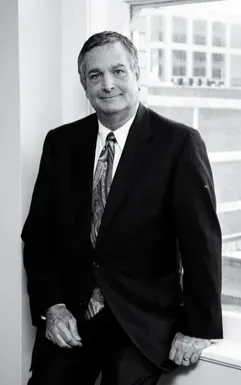
jim-parkmen-federal-lawyer

Jim Parkman has practiced in Alabama courtrooms since 1979, is a cum laude graduate of the Cumberland School of Law, has been named to the National Trial Lawyers Top 100, and served as President of the Criminal Defense Trial Lawyers Association. His white collar defense practice includes federal fraud and corruption trials that most defense lawyers only read about, including a federal public corruption case that, like the HealthSouth trial, ended in complete acquittal. National media coverage of his verdicts is the reason Fox News introduced him as the greatest lawyer on the planet. Résumés matter in this practice area for a practical reason. Federal prosecutors settle cases based on their assessment of trial risk, and nothing on this page influences that assessment more than verdicts they can look up. If your case should never be indicted, that credibility helps end it early. If it must be tried, you want the lawyer whose trial record is the reason the government hesitates.

Your license, your practice, and your freedom are all in play. Get a defense strategy from the lawyer who won the HealthSouth trial. Call (205) 573-6001.

Alabama Federal Fraud FAQs

It means prosecutors believe they have substantial evidence linking you to a federal crime and are likely moving toward indictment. It is also an invitation of sorts, because the pre-indictment window is when defense counsel can present evidence, challenge the theory, and negotiate before positions harden. Do not respond to it yourself, and do not ignore it. Both mistakes are expensive.

It depends entirely on what was said, and the honest answer requires reconstructing the conversation with a lawyer immediately, while your memory is fresh. Going forward, all contact runs through counsel. Agents are allowed to approach you again, and you are allowed to decline, politely and permanently.

A witness has information. A subject's conduct falls within the scope of the investigation. A target is someone prosecutors believe committed a crime and intend to charge. These labels move in both directions during an investigation, and moving a client from target to subject or witness through early advocacy is one of the most valuable things a federal defense lawyer does.

Sometimes, and the path runs through the loss amount, the guidelines, and the strength of the defense story. Outcomes in these cases range from declinations and dismissals to civil resolutions, pretrial diversion in rare cases, probationary sentences, and, when the facts demand it, acquittal at trial. Nobody honest promises a result, but the range of realistic outcomes expands dramatically the earlier the defense starts.

Yes. Federal law is national, but the prosecutors, judges, magistrates, pretrial services officers, and courtroom customs of the Northern District are local, and they shape everything from detention arguments to plea negotiations to sentencing. Jim Parkman has tried cases in the Hugo L. Black federal courthouse across five decades, including the most closely watched fraud trial ever held in it.

The First Call Matters More Than Any Other

Birmingham Office

850 Corporate Pkwy #100,
Birmingham, AL 35242

Available 24 hours a day, 7 days a week

Every federal fraud case has a moment when the outcome was still wide open, and it is almost always earlier than the client realized. If you are reading this page because of a subpoena, a target letter, an agent’s business card, or a quiet warning from a colleague, that moment is now.
Free, confidential consultation with an Alabama federal fraud lawyer. Call Jim Parkman Law at (205) 573-6001, day or night.

What Clients Say