
Jim Parkman Law

Birmingham Fraud Cases

Birmingham Fraud Lawyer

Defense for state and federal fraud charges, from the first knock on the door through the last day of trial

Fraud Cases Are Paper Cases, and Paper Can Be Answered

Here is something I have learned across more than 45 years of defending fraud cases: by the time you find out you are in one, the government has usually been reading your mail for a year.
Not literally, most of the time. But fraud investigations run long and quiet. Agents pull bank records, interview coworkers, and build a story out of documents before the person at the center of that story has any idea it is being written. Then one day there is a target letter in the mailbox, or a subpoena, or two polite investigators at the office asking if you have a few minutes to clear something up.
What you do in that moment matters more than almost anything that happens afterward. The people who call a fraud lawyer first protect themselves. The people who try to explain, because they know they did nothing wrong and believe explaining will end it, hand the government the final chapter of its story.
If that moment has arrived for you or someone you love in Birmingham, stop and make the Call. The consultation is free, it is confidential, and this firm answers day and night.

What This Page Covers

What Counts as Fraud Under Alabama Law

People are often surprised to learn that Alabama law rarely uses the word fraud by itself. Most state-level fraud prosecutions in Jefferson County and Shelby County are charged as theft by deception, where the state alleges that someone obtained money or property through a knowing misrepresentation. The seriousness of the charge scales with the dollar amount involved, from misdemeanor territory for small amounts up to serious felony classes for larger sums.
Around that core, Alabama charges a family of related offenses: insurance fraud, identity theft, forgery, credit card and financial exploitation offenses, and false statements to obtain benefits. Each has its own elements the state must prove, and each has its own weak points.
Then there is the federal layer. When the allegation touches a bank, a healthcare program like Medicare or Medicaid, the mail, the wires, or the securities markets, federal prosecutors in the Northern District of Alabama take the case, and everything changes: the investigative resources, the sentencing exposure, and the pace. Fraud that crosses into federal court is a different fight, and it is one this firm knows from the inside. You can read about our federal fraud defense practice in depth, including how federal cases are built and answered.

Penalties: What a Fraud Conviction Actually Costs in Alabama

The sentencing ranges get the headlines. Felony fraud convictions in Alabama can carry years in prison, and federal fraud counts can stack into decades of exposure. Courts also order restitution, which follows a defendant long after any sentence ends, and fines that can reach into six figures for serious schemes.
But in my experience, the punishment that changes clients’ lives most is the one nobody reads about. A fraud conviction is a permanent public statement that you are dishonest. It costs professional licenses. It ends careers in banking, healthcare, real estate, insurance, and government contracting. It shows up on every background check, every loan application, and every professional renewal for the rest of your life, and Alabama’s expungement rules offer almost no path to remove a fraud conviction once it exists.
That is why the time to fight a fraud case is before conviction, and ideally before charges. Everything worth protecting is still protectable at that stage.

Intent Is the Battleground, and It Is Winnable Ground
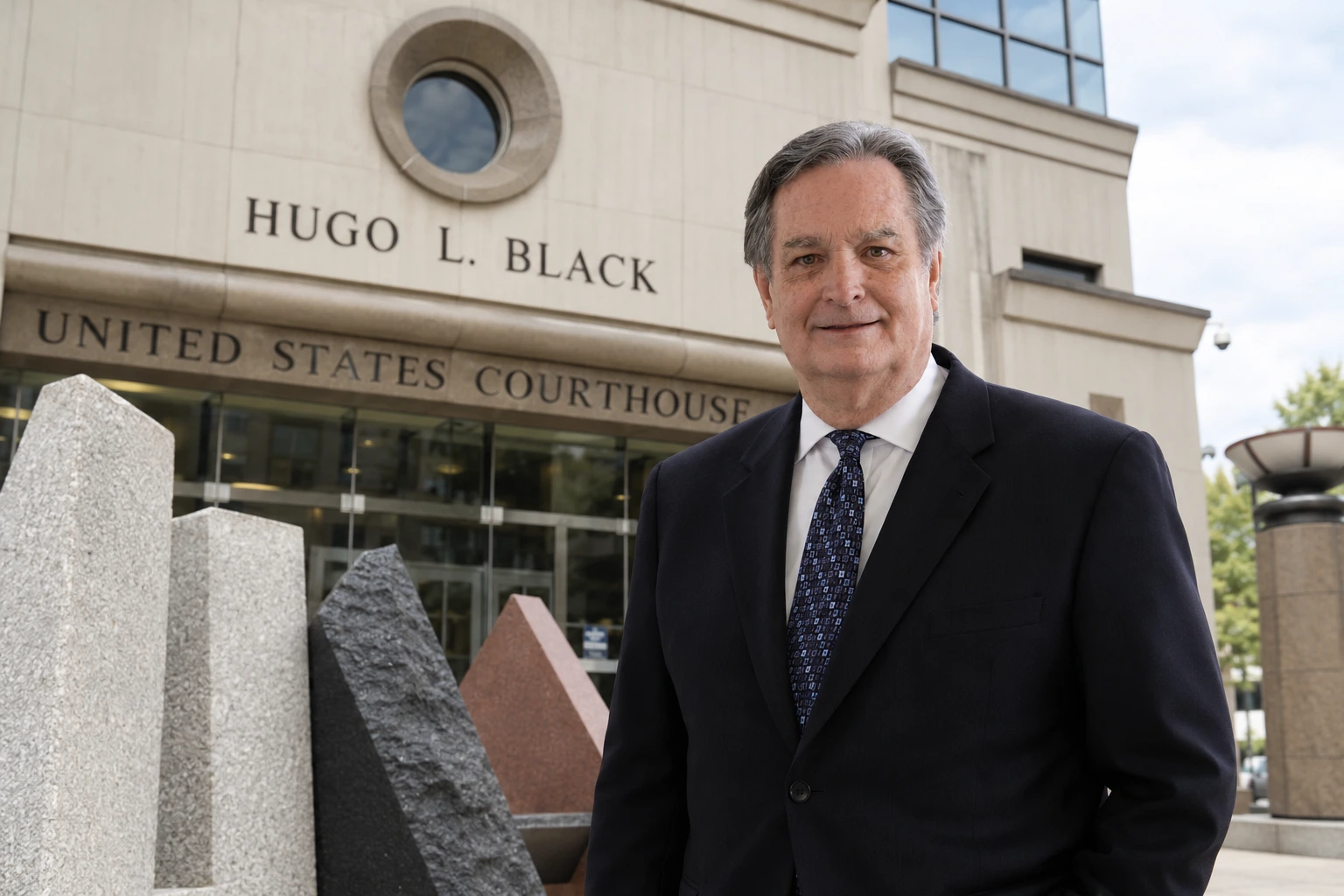
Birmingham fraud lawyer Jim Parkman reviewing financial records in his office
Every fraud charge, state or federal, rests on the same load-bearing wall: the government must prove you intended to deceive. Not that a transaction went bad. Not that paperwork was sloppy. That you, knowingly and on purpose, set out to take something through a lie.
Proving what was inside someone’s mind is the hardest job a prosecutor has, and it is where fraud cases are won. Bad record keeping is not fraud. Relying on an accountant’s advice is not fraud. Following instructions from a supervisor is not fraud. A business decision that lost other people money is not, by itself, fraud. The government’s documents tell one story, but documents do not speak for themselves. Somebody has to interpret them to a jury, and the defense gets a voice in that interpretation.
A real fraud defense goes through the government’s paper with more care than the government did. It traces where the numbers actually came from. It finds the emails the indictment leaves out. It challenges how the loss amount was calculated, because inflated loss numbers drive inflated charges. And where the investigation cut corners, it moves to suppress what should never have been collected in the first place.
I have been doing that work in fraud cases for most of my career, including a complete acquittal on all 36 counts in the largest corporate fraud trial ever put before an American jury at the time. I mention that case not to relive it, but because of what it proved: no fraud case is unbeatable just because the government’s stack of paper is tall. The taller the stack, the more places it can crack.

What to Do if Investigators Have Already Contacted You

Three rules, learned across four decades of these cases.
First, be polite and say nothing of substance. You can decline an interview without being rude, and declining is not evidence of anything. “I want to cooperate appropriately, but I need to speak with my attorney first” ends the conversation and protects you.
Second, do not clean anything up. Deleting emails, amending records, or getting your story straight with coworkers turns a defensible case into an obstruction charge. The cover-up genuinely is worse than whatever they think they have.
Third, call a fraud defense lawyer the same day. Early counsel can sometimes meet with prosecutors before charges are filed, correct the record on the government’s misreadings, and occasionally end an investigation before it ever becomes a case number. That door closes fast, and it never reopens.

A Birmingham Fraud Attorney Who Has Carried the Biggest Cases

jim-parkmen-federal-lawyer

Fraud defense rewards experience like no other practice area, because these cases are won in the details of documents and the credibility of the lawyer explaining them. Jim Parkman has spent more than 45 years building both. He holds the AV Preeminent rating from Martindale-Hubbell, the highest peer rating for legal ability and ethics, has been recognized by The Best Lawyers in America annually since 2021, and was named among the National Trial Lawyers Top 100. Judges and opposing counsel in the Jefferson County courthouse and the federal courthouse downtown know his name, and in a negotiation, that recognition is leverage that transfers directly to his clients. Just as important for a fraud case: Jim tries cases. Prosecutors track which defense lawyers fold and which ones pick juries, and they price their plea offers accordingly. When the lawyer across the table has won fraud verdicts at the highest level the system has, the conversation about your future starts from a different place. The firm defends fraud cases throughout Birmingham, Jefferson County, and Shelby County, in state court and in the U.S. District Court for the Northern District of Alabama, and takes serious fraud matters across Alabama. You can see how past cases have resolved on our case results page.

Fraud Defense Questions People Ask Us

Yes, and the investigation stage is when a lawyer can do the most good. Fraud cases are built quietly over months or years before charges are filed, and what you say to investigators before you have counsel is often the most damaging evidence in the eventual case. If you have received a target letter, a subpoena, or a request to answer questions, talk to a lawyer before you talk to anyone else.

Alabama prosecutes most fraud at the state level as theft by deception and related offenses, with penalties tied to the dollar amount involved. Federal prosecutors take cases involving banks, healthcare programs, the mail and wires, securities, or conduct that crosses state lines, and federal cases carry sentencing guidelines and investigative resources of a different magnitude. Jim defends both.

Yes. Fraud prosecutions depend on proving intent, and intent is the most contestable element in criminal law. Charges get dismissed or reduced when the defense shows the transactions have an innocent explanation, the paper trail is incomplete, a search violated the Fourth Amendment, or the loss amounts are inflated. Every one of those outcomes starts with a complete review of the evidence.

Penalties scale with the alleged loss amount and the type of fraud, from misdemeanors for small amounts to serious felonies carrying years in prison, plus fines and restitution. Federal fraud convictions can carry decades of exposure. Beyond sentencing, a fraud conviction closes professional doors for life, which is why fighting early matters so much.

You tell us what has happened, including any contact from investigators, and we give you an honest read on where you stand: what the government would have to prove, where the weaknesses likely sit, and what should happen next. It is free, it is confidential, and we answer day and night.

Before You Answer Their Questions, Get Answers to Yours

Birmingham Office

850 Corporate Pkwy #100,
Birmingham, AL 35242

Call (205) 573-6001, Day or Night

Fraud cases move slowly right up until the moment they move fast. If you have been charged, contacted, or you simply suspect an investigation has started around you in the Birmingham area, the smartest step available costs nothing: a free, confidential conversation about where you actually stand.

What Clients Say